Physical Address
304 North Cardinal St.
Dorchester Center, MA 02124
Physical Address
304 North Cardinal St.
Dorchester Center, MA 02124
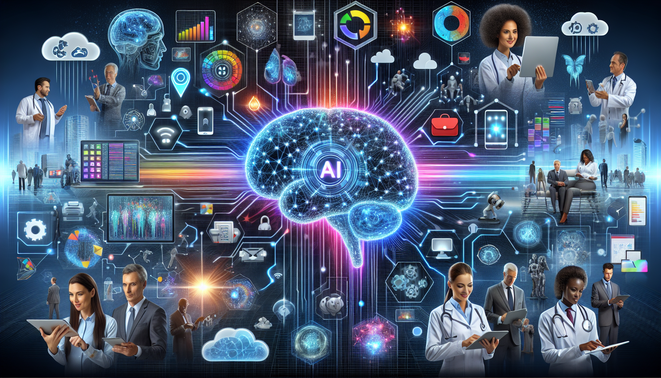
The Role of AI in Modern Business and Cloud Services
Meta Summary: Discover how Artificial Intelligence (AI) is transforming modern businesses and cloud services, driving efficiency, innovation, and competitive advantages. Explore key AI concepts, their integration into cloud platforms, practical applications across industries, and future trends shaping organizational strategies.
Introduction to AI and its Importance
AI’s Impact on Business Transformation
Artificial Intelligence (AI) is changing the way businesses operate. It enhances decision-making, improves customer experiences, and optimizes operations. By leveraging AI, organizations can harness data like never before, fueling digital transformation and creating competitive advantages.
Tip: Keep abreast of AI trends to leverage its potential fully.
AI: A Technical Deep Dive
AI involves technologies that mimic human intelligence, such as learning, reasoning, and self-correction. It is integral to digital transformation, transforming business operations and enhancing customer value delivery. By swiftly processing vast datasets, AI uncovers insights and automates intricate tasks, improving decision-making and operational efficiency.
Key AI Concepts and Terminology
Essential AI Terminologies
Understanding AI requires knowledge of core concepts such as Machine Learning (ML), Neural Networks, and AI models. These form the backbone of AI solutions that drive innovation and boost business capabilities.
Detailed Explanation
Machine Learning (ML): Enables systems to learn from data and make decisions autonomously, crucial for predictive analytics.
Neural Networks: Modeled after the human brain, these recognize complex patterns, excelling in image and speech recognition.
AI Model: Represents tasks through algorithms trained on data, focused on achieving accuracy in specific functions.
Note: Successful AI implementation relies heavily on superior data quality.
AI in Cloud Services
Transformative Role of AI in Cloud Platforms
Cloud platforms are increasingly integrating AI to deliver scalable, efficient services. This integration allows businesses to harness AI benefits without extensive physical infrastructure, providing flexibility and cost efficiency.
Integration Explained
AI-embedded cloud services by AWS, Google Cloud, and Microsoft Azure deliver significant business advantages:
Scalability and Flexibility: AI handles workload variation without necessitating physical infrastructure expansion.
Cost Efficiency: Reduced data processing and storage costs, adhering to a pay-as-you-go model.
Advanced Capabilities: Enables real-time analytics, automated workflows, and intelligent customer engagement.
Case Study: A top e-commerce firm’s AI-enhanced cloud infrastructure boosted sales conversion by 30% through better product recommendations.
Practical Applications of AI in Business
AI’s Role Across Various Industries
AI’s profound impact is evident in numerous industries, enhancing efficiency, innovation, and competitiveness. From healthcare to finance, AI solutions significantly improve business processes and outcomes.
Application Examples
Healthcare: AI improves diagnosis accuracy and treatment planning, enhancing patient outcomes.
Finance: Used for fraud detection and customer service automation, AI strengthens security and compliance through pattern analysis.
Manufacturing: Predictive maintenance solutions minimize downtime and cost by foreseeing equipment failures.
Retail: Personalized recommendations and chatbots enhance customer experience and operational efficiency.
Note: Ignoring data quality can hinder AI success—ensure robust data strategies.
Conclusion: The Future of AI in Organizations
Anticipating AI Trends
AI’s organizational role will expand due to tech advancements and data growth. Preparing for emerging trends is essential for businesses to maintain competitiveness and innovation.
Future Outlook
Increased Automation: Frees up human resources for strategic efforts, enhancing productivity.
Advanced Decision-Making: Provides deeper operational insights, enabling swift market adaptations.
AI Ethics and Governance: Essential for responsible AI use and governance framework establishment.
AI in Edge Computing: Promotes real-time data processing, benefiting IoT applications and remote locations.
Tip: Foster ongoing learning and collaboration between technology and business teams.
Visual Aids Suggestions
Diagram illustrating AI, ML, and neural networks relationships with business applications examples.
Flowchart of AI-enhanced cloud services benefits.
Infographic showcasing AI applications across different industries with outcomes.
Key Takeaways
AI is revolutionizing digital transformation, offering data processing, decision-making, and automation benefits.
Core AI concepts like machine learning, neural networks, and models are crucial for innovative solution development.
Cloud platforms’ AI integration delivers scalable, cost-efficient solutions.
AI enhances industry efficiency, innovation, and competitiveness with practical applications.
Upcoming AI trends necessitate adaptation and responsible governance by businesses.
Glossary
Artificial Intelligence (AI): Simulates human intelligence processes.
Machine Learning (ML): Systems learning autonomously from data.
Neural Networks: Brain-inspired computational models for pattern recognition.
AI Model: Algorithm trained on data to perform tasks.
Digital Transformation: Digital technology integration reshaping business operations.
Knowledge Check
What is Machine Learning?
Type: Multiple Choice Question (MCQ)
How does AI enhance cloud service offerings?
Type: Short Answer
Identify a practical application of AI in healthcare.
Type: Short Answer
Discuss the advantages of AI-driven decision-making.
Type: Short Answer
Explain Edge Computing in relation to AI.
Type: Short Answer
Further Reading
What Is AI?
What is AI? Microsoft Azure
What is Artificial Intelligence? A Simple Explanation for Anyone
